
Azalia Global Time Council Database

Azalia Global Time Council

Information

Abbreviation: AGTC
Formation: 1497
Type: International temporal defense organization
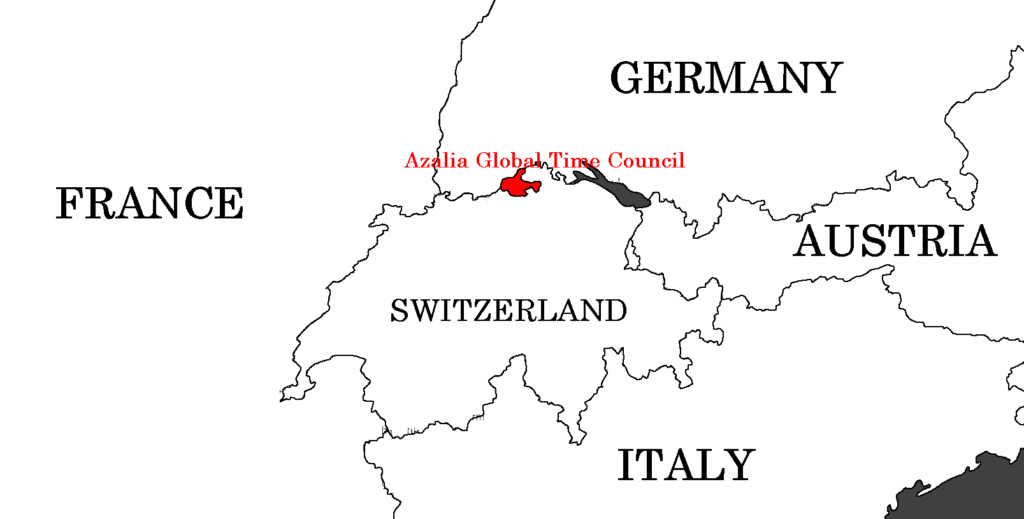
Headquarters: Azalia Territories
Official languages: English, German, French
Members: Every independent region, state, or country in the world.

About the Azalia Global Time Council

FUNCTION:

The Azalia Global Time Council is the governing body responsible for keeping the timeline safe by defending, regulating, and governing the Time Stones and the Time Jewel. It tackles issues related to the temporal artifacts, dispatching temporal law-enforcement units known as Stonewielders. 

Each country has a specific number of Stonewielders, with one serving as the representative of the country’s Stonewielder community.

The Council researches Time Stones and the effectiveness of the Time Stone criminals’ blueprints and designs. It also invests heavily in developing advanced technologies to help Stonewielders carry out their duties.


STRUCTURE

The Azalia Global Time Council’s structure consists of the Secretary-General on top, the Executive Directorate in the middle, and the Stonewielder representatives at the bottom.

When a major decision is proposed, or an emergency is declared, the AGTC General Assembly convenes at headquarters. Participants include AGTC officials, and Stonewielder representatives from each nation have the ability to vote. The General Assembly consists of senior AGTC officials and Stonewielder representatives. Voting power is weighted according to institutional responsibility and each country's contribution to the Council. 


SECRETARY-GENERAL

The Secretary-General is the Council's public-facing leader, elected by the General Assembly every six years. Though the role has the most power in the entire Council, it’s still overpowered by the combined power of the executive directorate.


EXECUTIVE DIRECTORATE

There are seven executive directorates, each responsible for its own departments.

  • Department of Stonewielder Affairs

  • Department of Temporal Intelligence

  • Department of Temporal Research

  • Department of Temporal Stability

  • Department of Legal and Regulatory Affairs

  • Department of International Relations

  • Department of Administration


STONEWIELDER REPRESENTATIVES

The Stonewielder representatives of each nation are appointed by the Department of Stonewielder Affairs. Their primary role is to report directly to the AGTC, handle most paperwork, and participate in Council meetings, representing the nation to which they are assigned.


HISTORY

By the fifteenth century, Europe saw a rise in Stonewielders. However, they are seen by the eyes of most as evil witches using dark magic, causing them to be hunted down and burned by the governments and churches of their time. However, there was a man born in nobility named Friedrich Azalia, who after stumbling into a Time Stone that chose him as its champion, saw himself as chosen by God. He immediately founded a polity within the Holy Roman Empire named the Kingdom of Azalia.

            Under the Stonewielder king, many of its inhabitants began to ease up on Stonewielders, accepting them as the holy protectors of the Kingdom. However, the rest of the world still didn’t adopt the same worldview.

            In the year 1495, Leonardo da Vinci finished successfully creating the first machine capable of harvesting the Time Stone’s temporal energy. The first ever distress call was sent by the Time Stone, triggering the Time Stones of all active Stonewielders, most of whom resided in Europe.

            The Stonewielder king himself, Friedrich Azalia, traveled across the Alpine mountains alone with his Time Stone and into the Duchy of Milan, where he tackled the issue with Leonardo da Vinci. It is unknown whether there was fighting involved, but the situation was resolved and the Time Stone was confiscated.

            This attracted the attention of governments of the known world, including the Catholic Papacy, who pushed towards establishing a Council in the Kingdom of Azalia to tackle Time Stone-related threats in fear that harvesting the Time Stone’s power would destroy the world.

            By 1497, diplomats from most of the known world set aside their differences on the matter and gathered in the Kingdom of Azalia, leading to the founding of the Azalia Global Time Council. From then on, it distanced itself from the messy political affairs and focused instead on gaining new members.

            When the Council found out about the existence of the Time Jewel in Ajkalsk, they sent scholars to investigate it, discovering its power over the standard ime Stone. Ultimately, the AGTC decided to allow the Ajkalsk townsfolk to keep the Time Jewel as long as they abide by the Azalia Accords of 1574, not wanting to cause any more tensions between Central Europe and the newly formed Tsardom of Russia.

            By 1919, during the Russian Civil War, the Azalia Global Time Council was fearful and untrusting of the new Bolshevik regime in Russia and the similar uprisings in Hungary and Bavaria. They feared that the new and radical forms of government would threaten the existence of the Time Stones and especially the Time Jewel.

Immediately, the Council temporarily allied with the Entente and sent Stonewielders to assist in an invasion through the Arctic Ocean and into Ajkalsk to retrieve the Time Jewel. Though it was a success, the French demanded they keep the Time Jewel in a museum. After a short diplomatic dispute, the AGTC had to yield.

In the 1940s, the Germans invaded France and managed to steal the Time Jewel before it could get evacuated. They experimented on the Time Jewel and began to threaten the AGTC by using legal loopholes to execute the Stonewielders in Germany and its occupied territories, such as sending them to the Soviet-German front.

When a German Stonewielder was captured and stumbled upon a Soviet Ukrainian Stonewielder, they teamed up, with the help and approval of the Azalia Global Time Council, launched a secret all-stonewielder operation to steal the Time Jewel to prevent German experimentation.

In 1987, a rogue Stonewielder named Julian Ward, who frequently protested against the Council, betrayed them. After a brief combat engagement in the Azalia Territories, Julian Ward left the AGTC and formed an opposition movement called the Mektorian Movement, which seeks to dismantle the old world order, including the Council, and create a new one from the ground up.